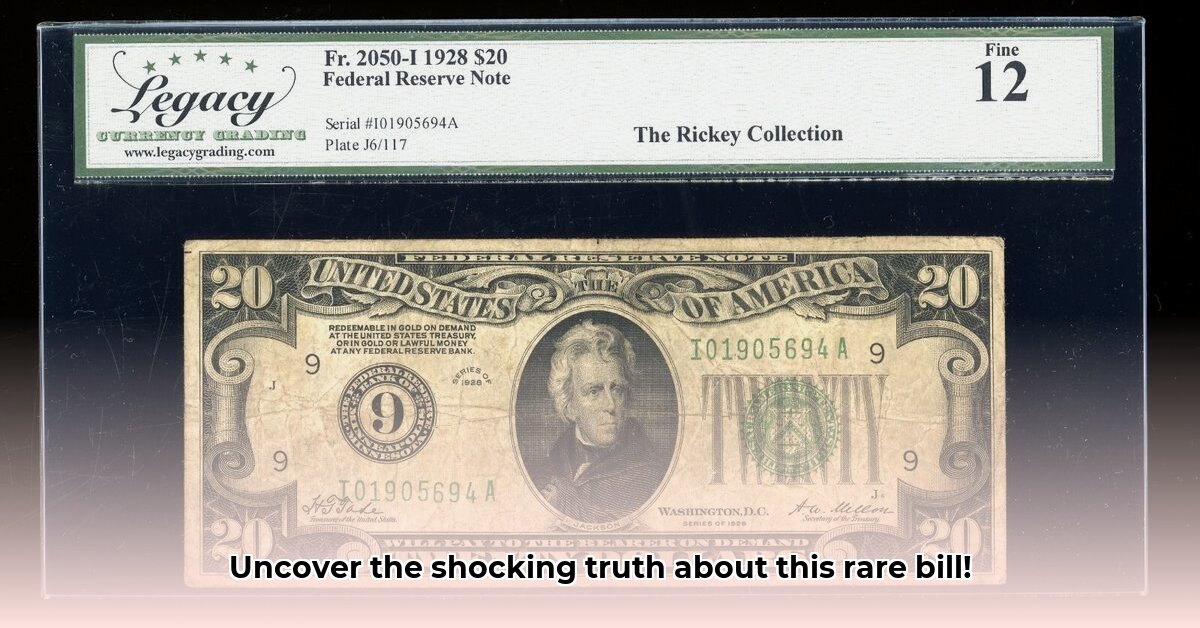
The 1928 $20 bill holds a unique place in American numismatic history. Its value, however, isn't fixed; it's a dynamic figure influenced by several key factors. This guide provides a structured approach to understanding and determining the worth of your 1928 twenty-dollar bill, whether you're a seasoned collector or a curious newcomer. For more on valuable currency, check out this guide on 1845 dollar coins.
Factors Affecting Value: A Collector's Checklist
Several interconnected factors determine the value of a 1928 $20 bill. Understanding these is crucial for accurate assessment.
Condition: The Foundation of Value
A 1928 $20 bill's condition, or grade, significantly impacts its worth. Think of it like a classic car: a pristine example fetches far more than a well-used one. The Sheldon Scale, a widely used grading system in numismatics, ranges from 1 (poor) to 70 (gem uncirculated). Higher grades correspond to higher values. Isn't it fascinating how a bill's condition can drastically influence its worth?
Series: A, B, or C – Subtle Differences, Significant Impact
1928 $20 bills were issued in three series: A, B, and C. These series possess subtle differences in design and printing. These seemingly minor variations translate to significant differences in rarity and collector demand, directly affecting the final price. Do you know which series is the most rare? Researching your bill's series is a key step.
Star Notes: Rarity's Mark
"Star notes" are replacement bills printed to replace damaged or flawed originals, indicated by an asterisk (*) after the serial number. Their rarity significantly boosts their value. A star note is often more than five times the price of a standard note from the same series.
Federal Reserve Bank: Regional Variations
Each of twelve Federal Reserve Banks issued 1928 $20 bills, each with a unique letter code. The issuing bank influences a bill's rarity, thus its value. Some banks issued fewer bills than others, making those less common bills more desirable to collectors.
Grading Systems Explained: A Deeper Dive
The Sheldon Scale is the most common grading system used for banknotes. It considers various factors such as paper quality, sharpness of printing, presence of flaws or repairs, and overall wear and tear. Understanding this scale is vital for accurate grading. Professional grading services offer objective assessments for the most reliable results.
| Grade Level | Description | Value Impact |
|---|---|---|
| 65-70 | Gem Uncirculated, virtually flawless | Very High |
| 50-64 | Choice Uncirculated, minor imperfections | High |
| 35-49 | Very Fine, some wear | Moderate |
| 1-34 | Circulated, significant wear | Low |
Pricing and Market Analysis: Gauging the Value
Determining the precise value of your 1928 $20 bill requires careful consideration of all factors mentioned above. While online resources offer estimates, they are often imprecise. The fluctuation in the market of these items is significant. Remember, these prices evolve over time.
Actionable Steps: A Practical Guide
- Careful Examination: Thoroughly inspect your bill for any signs of wear, tears, or damage.
- Series Identification: Locate and note the series letter (A, B, or C).
- Star Note Check: Look for an asterisk (*) after the serial number.
- Federal Reserve Bank Identification: Identify the Federal Reserve Bank letter code.
- Online Research: Use reputable online price guides for initial estimates.
- Professional Appraisal: For the most accurate assessment, seek professional appraisal by a reputable numismatist.
Remember: Online estimates are just a starting point. Professional appraisal from a qualified numismatist provides the most accurate valuation.
Conclusion: Protecting Your Piece of History
The value of your 1928 $20 bill is a unique blend of condition, rarity, and market forces. By meticulously examining these aspects and seeking professional expertise, you can gain a clear understanding of its true worth. Proper storage and handling are crucial to preserving its value over time. Further research using reputable numismatic resources will enhance your understanding of coin and note collecting.